Explore the Archival Collection

The Frank Lloyd Wright Trust’s Archival Collection consists of unique and rare materials of historical and research significance that document the life, work, and enduring legacy of Frank Lloyd Wright. Often one-of-a-kind or difficult to replace, these collections include correspondence, manuscripts, photographs, rare books, architectural documentation, audiovisual materials, and other primary source materials with direct provenance to Frank Lloyd Wright, his family, contemporaries, close collaborators, and the history of the Frank Lloyd Wright Trust. Housed within the Trusts Learning Resource Center, the Archival Collection serves as an invaluable resource for scholars, preservation professionals, students, and the public. Through the preservation and stewardship of these materials, the Trust supports ongoing research, exhibitions, publications, educational initiatives, and the continued understanding of Wright’s architectural and cultural legacy. The Trust welcomes researchers, students, educators, and members of the public to explore and make use of these resources in support of their own research and learning. Researchers may access the collections by appointment only.
Hours of Operation
The Frank Lloyd Wright Archive is available by appointment only. To schedule an appointment, please e-mail us at archive@flwright.org. Any other inquiries or research requests can be directed there as well. Our hours are the following:
Wednesdays 1 - 4 pm
Explore the Collection
The Personal Papers & Manuscripts collection preserves original correspondence, notes, lectures, manuscripts, biographical materials, and other documentary records that illuminate the lives and work of Frank Lloyd Wright, his family, associates, contemporaries, and individuals connected to his architectural and cultural legacy. These primary source materials provide valuable insight into Wright’s professional relationships, artistic endeavors, preservation efforts, public engagements, and personal life. Notable materials represented in the collection include correspondence between Frank Lloyd Wright, his assistant Eugene Beyer Masselink, and William B. MacDonald documenting early efforts to preserve the Frederick C. Robie House, as well as letters, photographs, and planning documents that record the campaign to safeguard one of Wright’s most significant architectural works.
Researchers will also find original handwritten letters by Frank Lloyd Wright, including his 1914 correspondence with Mrs. Robert McGann, the first president of the Arts Club of Chicago. The letters discuss Wright’s loan of prints for their exhibition, Antique Color Prints from the Collection of Frank Lloyd Wright, which was presented in 1917. Together, these materials offer firsthand perspectives on Wright’s professional collaborations, public engagements, and the lasting influence of his work, making the collection an invaluable resource for scholars studying his life, architecture, and legacy.
Researchers, students, educators, and members of the public are encouraged to engage with these materials to discover new perspectives, deepen their understanding of Wright and his time, and explore the history behind the places and ideas that continue to shape our cultural landscape. By making these primary sources available for research and learning, the Trust invites the public to participate in the ongoing discovery, interpretation, and preservation of Wright's legacy.
Archival Resources for Research
The Frank Lloyd Wright Trust Archive makes selected archival materials available through collection-level finding aids. These guides provide researchers with an overview of the materials held by the Archive and help identify correspondence, manuscripts, photographs, and other records relevant to Frank Lloyd Wright, his family, associates, contemporaries, and the preservation of his architectural legacy. The finding aids below provide information about the scope and content of individual archival collections, including their historical context, date ranges, extent, and materials available for research.
Finding Aids
Alfred MacArthur Correspondence with Frank Lloyd Wright
Dates: 1926-1940
Extent: .21 linear feet
This collection is comprised of personal correspondence between Alfred MacArthur and Frank Lloyd Wright, primarily regarding the Lloyd Lewis house, designed by Wright in 1936; and related material.
Edward David Davies Collection
Dates: 1871-1950, 1988
Extent: 1 folder and 1 audio cassette
The Edward David Davies Collection contains a small group of documents and correspondence associated with architect Edward David Davies, including biographical material, letters, and an envelope addressed to Davies from Taliesin. The collection also includes an audio cassette recording of an interview with Davies conducted by Elsie Jacobson at his home in Mendocino, California.
Frank Lloyd Wright and William B. MacDonald Papers
Dates: 1956-1959
Extent: 0.42 linear feet
This collection contains typed correspondences from Frank Lloyd Wright and Eugene Masselink to William B. MacDonald regarding the Fredrick Robie House and their efforts to save this building. It also contains an undated "Plan" proposal for the Robie House Preservation Project, and two photographs of Frank Lloyd Wright.
Harriet Dyer Adams Collection on Frank Lloyd Wright Structures
Dates: 1948-1951
Extent: 2 folders
This collection is comprised of two folders of Adams’ hand-written notes and descriptions, some accompanied by black and white photos of various Wright-designed structures compiled into an unbound, loose-leaf scrapbook titled, Study of Frank Lloyd Wright: Buildings Which I Have Seen or Been Through, Plus Other Material On Him. Also included is a newspaper article dated April 30, 1950 from the Louisville Courier Journal, titled “Architect Wright and Pupils Build Co-op Homes on Circular Lots.”
Lewis Lozier House Collection
Dates: 1938
Extent: 13 blueprint sheets, 1 certificate survey
The Lewis Lozier House contains 13 architectural blueprints for the Lewis H. Lozier House, designed by Tallmadge and Watson, including elevations, floor plans, and building details. The collection also includes a 1938 certificate of survey prepared by Cicero State Bank by the National Survey Service of Chicago, Illinois, created for the purpose of a mortgage loan applied for on May 18, 1938, by Dr. M.J. and Normal J. Summerville
Robert G. Emmond Collection
Dates: circa 1892-1895
Extent: 1 folder, several oversized materials and three architectural elements
The Robert G. Emmond Collection contains architectural documents and related materials associated with the design and contents of the Robert G. Emmond house in LaGrange, Illinois. Architectural drawings include elevations and floor plans dated July 16, 1892, and represent a transitional design attributed to Frank Lloyd Wright. The collection also includes architectural elements removed from the building, such as two lead-glass windowpanes and one closet door. Additionally, the collection contains a bound household inventory booklet titled, The Householder’s Handy Inventory Book (F.D. Cossitt & Co., LaGrange, Illinois), in which Robert G. Emmond recorded household property for insurance purposes circa 1895.
William Drummond Papers
Dates: circa 1890-1960
Extent: 0.42 linear feet, 12 oversized items of graphic materials
This collection documents the personal, business, and artistic activities of William Drummon. It contains correspondence, sketches, juvenile art, poetry, architectural drawings and specifications, architectural publications, notes, and clippings.
Research Access
The Frank Lloyd Wright Trust Archive welcomes all researchers interested in the study of Frank Lloyd Wright, his architectural practice, his family and associates, and the preservation of his work.
Archival materials are available for research by appointment. Researchers should consult the appropriate finding aid before submitting a research request. Finding aids describe the scope and organization of each collection and can help researchers identify materials relevant to their area of study.
Researchers interested in accessing the Archive should reach out to archive@flwright.org. Appointments can be scheduled based on a day and time of their preference for specific research study.
The Architectural Drawings Collection preserves original and reproduced architectural drawings documenting the architectural designs of Frank Lloyd Wright and related works by his contemporaries. These materials primarily represent the design, planning, and documentation of buildings and provide valuable insight into Wright’s architectural philosophy, design process, and the evolution of his projects. This collection includes a variety of drawing types, such as plans, elevations, sections, perspectives, blueprints, tracings, presentation drawings, and other architectural renderings of Frank Lloyd Wright structures, as well as works by associated architects. For preservationists, architects, students, and researchers, these drawings provide an opportunity to examine Wright’s designs at their source and support the documentation, interpretation, restoration, and preservation of his work. Researchers are encouraged to consult these materials as they develop projects, investigate the history of individual buildings, or seek a deeper understanding of Wright’s architectural methods and legacy. Together, these materials serve as an important resource for researchers, preservationists, architects, and students studying Wright’s architectural legacy and the broader development of Prairie School architecture..
The Archival Photograph Collection preserves historical photographs and other visual materials documenting Frank Lloyd Wright, his architectural works, associated sites, broader legacy, and the history of the Frank Lloyd Wright Trust. Spanning a variety of photographic formats- including prints, negatives, slides and other visual media- the collection serves as an essential resource for research, documentation, preservation, and interpretation. Among the collection’s highlights is Frank Lloyd Wright’s 1905 album of photographs taken during his first trip to Japan, offering a rare firsthand perspective on the journey that profoundly influenced his appreciation of Japanese art, architecture, and design. The collection also includes original photographs of the Robie family, providing insight into the occupants of one of Wright’s most celebrated Prairie houses, as well as original photographs of the Wilbur family, the last family to reside in the Frederick C. Robie House before its preservation as a historic site. Together with extensive visual documentation of Wright’s buildings, restoration projects, exhibitions, and institutional history, these photographs preserve the people, places, and stories that continue to shape the legacy of Frank Lloyd Wright and the Trust’s preservation mission.
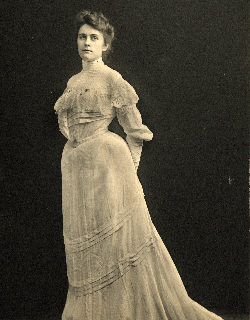
Unknown
[Lora Hieronymus Robie
Wedding Portrait], ca. 1912
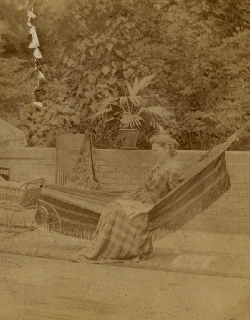
Unknown
[Catherine Lee Tobin Wright Sitting
on Hammock], ca. 1890
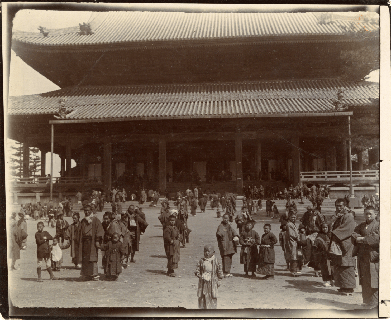
Frank Lloyd Wright
[Photograph from Frank Lloyd Wright’s 1905 Japanese
Photo Album, pg.6], ca. 1905
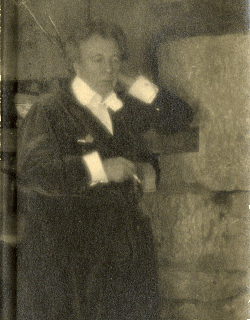
Unknown
[Frank Lloyd Wright Holding
a Cigar], ca. 1920
Copyright & Image Licensing
Please note that in many cases the Trust owns only the physical object, and therefore, does not assume any responsibility for intellectual property, copyright, or any other legal issues involved in the publication and reproduction of items in its collection. Reproductions of photographs within the collection in no way transfers either copyright or property rights; nor does it constitute permission to publish or display materials.
Digital Reproduction Services
Digital reproductions of photographs may be requested for research, educational purposes, publication, or personal use. Selected images are available as digital files (jpeg, 300 DPI) with other formats available upon request. All requests are evaluated on a case-by-case basis, taking into consideration the physical condition of the original photograph, copyright restrictions, donor agreements, and staff capacity. Researchers who wish to obtain digital images must complete a Reproduction Request Form. All requests should be submitted to the Archive at archive@flwright.org.
Processing time generally requires one to two weeks, though more complex requests may require additional time. The Trust reserves the right to decline reproduction requests when fulfilling them could jeopardize the preservation of the original materials or violate legal or donor restrictions.
Images of works from the Trust’s collection may not be reproduced without the express written permission of the institution and that of the copyright holder, when applicable. Copying or redistributing images in any form for personal or corporate gain is prohibited.
Any image reproduced must be accompanied by the following credit line: “Courtesy of the Frank Lloyd Wright Trust Archive, Chicago.”
Digital Collections
The Frank Lloyd Wright Trust is actively cataloging and digitizing the Archival Photograph Collection to improve access for researchers and the public. This ongoing initiative will result in a searchable online Digital Collections portal featuring catalog records, digital images, and enhanced descriptions of photographs documenting Frank Lloyd Wright, his architecture, and the history of the Trust.
As additional photographs are processed and digitized, new content will continue to be added, expanding access to the collection over time. Stay tuned as this exciting project continues to grow, and we appreciate your patience and support while this work is underway!
The Rare Book Collection preserves rare, first-edition, and limited-edition publications of historical and research significance relating to Frank Lloyd Wright, architecture, design, and associated subjects. The collection includes books owned by Frank Lloyd Wright and his family, special collection books, and published materials that provide valuable insight into Wright’s architectural philosophy, artistic influences, and lasting impact on American architecture and design. Among the collection’s highlights are limited and first-edition books authored and/or illustrated by Frank Lloyd Wright, including The House Beautiful (1896), The Japanese Print: An Interpretation (1912), and the 1901 Chicago Architectural Club Catalog, which contains Wright’s handwritten revisions to his landmark essay, The Art and Craft of the Machine. Together, these rare publications serve as important primary resources for scholars and researchers, offering a deeper understanding of Wright’s ideas, writings, artistic influences, and contributions to architectural thought. The Trust welcomes researchers, students, educators, and members of the public to explore these materials by appointment, providing an opportunity to engage directly with rare publications and discover the ideas, influences, and history preserved within them.
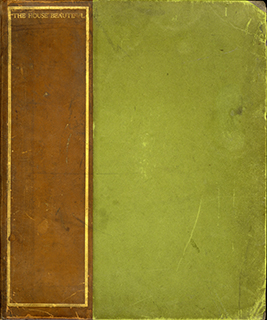
The House Beautiful
William C. Gannett; book designed by
Frank Lloyd Wright, First Edition, 1896-1897
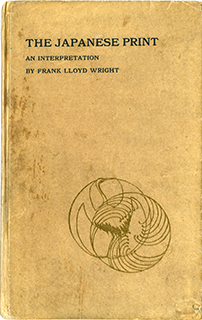
The Japanese Print: An Interpretation
Frank Lloyd Wright, First Edition, 1912
The Audio-Visual Collection preserves recorded media documenting Frank Lloyd Wright, the Trust, and related preservation and educational activities. The collection encompasses a wide range of formats, including motion picture films, videotapes, audiotapes, oral histories, CDs, born-digital recordings, and other audiovisual media that capture the architectural, cultural, and institutional history of the Trust. As part of the Trust’s ongoing commitment to preserving and sharing these materials, the Audio-Visual Collection is currently being digitized to ensure its continued accessibility and long-term preservation. As this work progresses, digitized materials will become increasingly available to the public, offering new opportunities to experience firsthand recordings and voices that bring Wright’s legacy and the Trust’s preservation work to life.
Mission
The Frank Lloyd Wright archive aligns with the Trust’s mission to “engage, educate, and inspire” by making these learning resources available to the public for the purpose of education about Wright’s design legacy through individual access and group classes. It is the Archive’s mission to collection, preserve, catalog, and provide access to materials that support the educational mission of the institute.
Access Policy
Access to the Frank Lloyd Wright Trust Archives is vital towards fulfilling the Trust’s mission to engage, educate, and inspire the public through interpretation of Frank Lloyd Wright design legacy and preservation.
Research visits and consultations in the Archives are made by appointment only. To request an appointment or consultation, please email the Archive at archive@flwright.org. The care and preservation of the collection is the Archive’s priority; all decisions regarding access to collections are made by the Archivist, in conjunction with conditions of materials and whether any donor or copyright issues exist. If it is determined that access cannot be granted, alternative documentation may be provided with photocopies, photographs, or reproductions if available.
The Trust also permits the personal and educational use of unrestricted collection documents, photographs, and audio-visual materials. This includes permission to take non-flash digital photographs for personal use or to help with further research during your visit.
The use of collection documents, photographs, and audio-visual materials for publication, distribution, or commercial purposes requires prior written permission and licensing from the Frank Lloyd Wright Trust. Licensing and reproduction fees may apply. Refer to the Reproduction Form for any related requests.
For any restricted collection documents, photographs, or audio-visual materials, special written authorization from the Archive is required, as well as authorization from other parties depending on the material.
Collection Development Policy
Scope
The Frank Lloyd Wright Trust Archive Collection preserves unique and historically significant materials that document the life, work, philosophy, and enduring legacy of Frank Lloyd Wright, as well as the history, preservation, and stewardship of the Frank Lloyd Wright Trust and its historic sites. Emphasis is placed on primary source materials of long-term research, documentary, and educational value that support the Trust’s mission to preserve, interpret, and share Frank Lloyd Wright’s legacy.
The Archival Collection includes one-of-a-kind or difficult to replace materials with direct associations to Frank Lloyd Wright, his family, contemporaries, collaborators, the Frank Lloyd Wright Trust, and the preservation of Wright-designed sites. Materials are cataloged and preserved according to archival standards and are maintained as research collections separate from the Trust’s Permanent Collection. The Archives actively collects materials relating to the following areas:
- Frank Lloyd Wright’s personal and professional life, including correspondence, manuscripts, lectures, notes, and biographical materials.
- Frank Lloyd Wright’s architectural designs and related works through original and reproduced architectural drawings, blueprints, plans, elevations, sections, perspectives, tracings, and other design documentation.
- The preservation, restoration, rehabilitation, conservation, and maintenance of the Frank Lloyd Wright Home and Studio, Frederick C. Robie House, and other Trust-managed historic sites.
- The history, governance, programs, exhibitions, publications, and institutional activities of the Frank Lloyd Wright Trust.
- Historic photographs and other visual materials documenting Frank Lloyd Wright, his family, architectural works, associated individuals, historic sites, restoration projects, and the Trust’s institutional history.
- Rare books, limited editions, special collections books, and other published materials that support the study of Frank Lloyd Wright, architecture, design, and related subjects.
- Audio-visual and born digital materials documenting Frank Lloyd Wright, the Trust, and associated preservation, educational and public programs.
Materials We Collect
The Frank Lloyd Wright Trust Archive Collection preserves unique and historically significant materials that document the life, work, philosophy, and enduring legacy of Frank Lloyd Wright, as well as the history, preservation, and stewardship of the Frank Lloyd Wright Trust and its historic sites. Emphasis is placed on primary source materials of long-term research, documentary, and educational value that support the Trust’s mission to preserve, interpret, and share Frank Lloyd Wright’s legacy.
The Archival Collection includes one-of-a-kind or difficult to replace materials with direct associations to Frank Lloyd Wright, his family, contemporaries, collaborators, the Frank Lloyd Wright Trust, and the preservation of Wright-designed sites. Materials are cataloged and preserved according to archival standards and are maintained as research collections separate from the Trust’s Permanent Collection. The Archives actively collects materials relating to the following areas:
- Relevance: Item(s) must demonstrate direct association with Frank Lloyd Wright, his practice, or Trust-managed sites such as Home and Studio, The Rookery, Robie House, and Unity Temple.
- Provenance and Authenticity: Item(s) must demonstrate clear ownership history and verifiably origin.
- Research Value: Item(s) must have the potential to support scholarship, exhibitions, or interpretation.
- Uniqueness: The archive will show preference for original or rare materials over widely available reproductions.
- Physical Condition: Item(s) must be physically stable and feasible for preservation within the budgetary means of the Trust.
- Resource Capacity: The Frank Lloyd Wright Trust must be able to support the long-term stewardship of materials and provide appropriate and secure physical or digital storage space for future preservation, conservation, and access.
The Archive reserves the right to decline donations which do not fit these criteria.
Materials We Do Not Collect
All donations are subject to review by archive staff. The archive reserves the right to decline materials which fall outside the collection scope. The archive can also refuse any items in noticeably poor conditions that may require excessive conversation resources. Storage, preservation and access needs to be evaluated prior to acceptance, if the archive finds that they are unable to house objects that do not comply with those needs they are subject to turn down said donations and/or gifts. The archive also reserves the right to determine final disposition, housing, and use of donated materials. Accepted materials does not guarantee permanent retention, exhibition, or digitization.
Researcher Guidelines
To protext the archival holdings of Frank Lloyd Wright Trust, and to facilitate research, the following rules must be abided:
- All materials must be handled with the utmost care.
- Marks should never be added or earased. Tracing and rubbing are prohibited.
- Loose sheets and volume pages should be handled by their edges; documents should be kept flat on the table, rare books/journals/scarpbooks/diaries should be handled gently as to prevent separating covers and spine pieces from binding. Do not fold or turn down corners of pages, and do not use metal devices that clip tops of pages or anything thick that can tear or distort paper.
- Maintain the exact order of materials in a folder, and folders within a box. If any missarrangement is discovered, please notify a staff member immediately. Do not rearrange them yourself.
- The use of a pen of any kind is prohibited.
- No eating, drinking, or smoking is permitted while in the archive room and as well as using archival materials.
- Mutiliation, destruction, or theft of materials is subject to prosecution.
- Each patron is limited to one box of materials at a time.
- Some materials housed in the Archives require special handling and treatment. The archivist reserves the right to limit access to these materials.
Donations & Gifts
The collection scope for donations and gift to the archive must adhere to the Trust’s mission “engage, educate, and inspire” by making these learning resources available to the public for the purpose of education about Wright’s design legacy. The archive seeks to collection, preserve and provide access to materials that support its mission and document the life, work, legacy and influence of Frank Lloyd Wright and related institutions, individuals, and properties. Prospective donors are required to complete our Donation Form to provide all relevant information about the items being donated, including whether the materials will be considered for accession into the Permanent Collection, Archival Collection, or Interpretive Collection. The archive may accept donations and gifts including, but not limited to:
- Manuscripts and personal papers
- Correspondence and research files
- Photographs and audiovisual materials
- Architectural drawings, blueprints, and plans
- Books, publications, and ephemeral
- Institutional records of enduring historical value
- Scrapbooks, clippings, and documentary materials related to Frank Lloyd Wright,, associated properties, or related individuals
Materials must support the archive’s mission, collecting priorities, and long-term preservation capabilities. For further inquiries regarding donations, please contact archive@flwright.org, the Archivist and Collections Manager, Andria Castillo at acastillo@flwright.org or Preservation Architect, Cathi Ward at cward@flwright.org
Conditions of Acceptance
All donations are subject to review by archive staff. The archive reserves the right to decline materials which fall outside the collection scope. They can also refuse any items in noticeably poor conditions that may require excessive conservation resources. Storage, preservation and access need to be evaluated prior to acceptance, if the archive finds that they are unable to house objects that do not comply with those needs they are subject to turn down said donations and/or gifts. The archive also reserves the right to determine final disposition, housing and use of donated materials. Accepted materials does not guarantee permanent retention, exhibition, or digitization.
Ownership and Rights
Donors must be the lawful owners of materials offered for donation or otherwise authorized to transfer them. Whenever possible, donors are encouraged to transfer any associated intellectual property rights or copyright.
Restrictions
The archive generally discourages donations with excessive restrictions regarding access, reproduction, exhibition or future use. Any restrictions requested by a donor must be clearly documented and approved prior to acceptance.
Appraisals
The archive does not provide monetary appraisals for tax or donation purposes. Donors seeking appraisals are responsible for securing independent professional appraisal services.
Following is a list of links to national repositories with significant holdings of Frank Lloyd Wright collections, architectural drawings, reference materials, and manuscripts collections. The descriptions of the individual holdings of each of these repositories are not meant to be exhaustive, and for more detailed information of collections and holdings the repository should be contacted directly.
Avery Architectural and Fine Arts Library
The Avery Library at Columbia University is the repository of the most comprehensive archival collection of the work of Frank Lloyd Wright, including 23,000 architectural drawings, extensive personal and professional correspondence as well as 44,000 photographs of both personal and architectural photography of Wright’s works, interview tapes, transcripts and films.
The Museum of Modern Art
The Museum of Modern Art houses three-dimensional works by Wright, including architectural models, architectural elements and design prototypes.
Ryerson & Burnham Libraries, Art Institute of Chicago
The Ryerson & Burnham archives include strong collections in late-19th- and 20th-century American architecture, with particular depth in Midwest, Chicago School, Prairie School and organic architecture.
Special Collections Research Center at the University of Chicago
Special Collections Research Center houses Frank Lloyd Wright manuscript material and architectural records of the Frederick C. Robie House.